Introduction
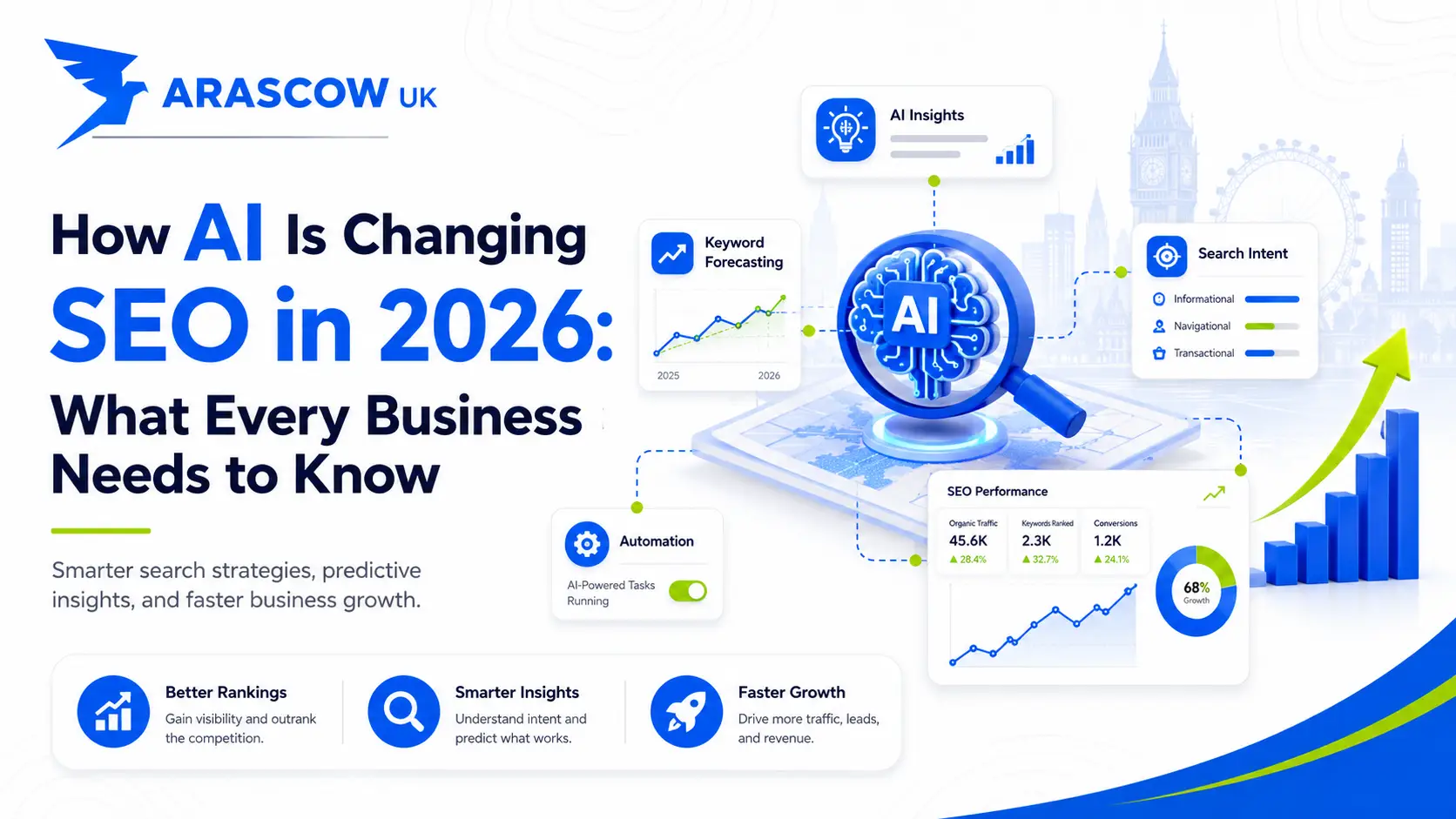
In recent years, there has been a major structural shift that has made AI a core engine. People go to chatbots and Google-assisted AI, put their queries there, and get customized information as per their needs. They can also instruct them on the level of information they require, from beginner-friendly to field experts. Search engines have now evolved from traditional indexing to native RAG models, leading to generative-first indexing. Content is no longer simply ranked by keywords; it is digested by LLMs to construct real-time, dynamic synthesised answers directly on the search result page. So, AI SEO 2026 is now inevitable for businesses that want to gain true rankings faster.
Now algorithms evaluate content based on its contextual density rather than just keywords. They will rank your content even if it is not fully optimised against the targeted keywords, understanding its core intent and semantic perspectives. Businesses can no longer manipulate the algorithms just by enriching their content with keywords. On the user end, AI engines analyse their behaviour across devices and present the same kind of information based on their search needs. Businesses that do not adapt to new content strategies and SEO techniques will face a zero-click traffic trap, a drastic drop in informational impressions, and brand de-indexing due to informational gaps.
Content Creation in the Age of AI in SEO
Instant Quality Checks
Search engine crawler models now instantly convert text into multi-dimensional vector embeddings. It benchmarks the new content against top-ranking industry databases to calculate its information-gain score within seconds of publication. It is called real-time vector matching. Similarly, advanced LLM parsers evaluate text structures to detect if the content is thin, paraphrased, or generic. They filter out the pages from the primary retrieval index if they lack unique value addition and are based on superficial information.
Human Plus AI Collaboration
The content team uses AI, especially for outline building, to understand the user intent and what queries they have in their mind regarding a specific topic. They also get help regarding mapping semantic keyword clusters and generating schema codes. It speeds up the content creation and AI content optimisation process but doesn’t provide much value without human supervision. That’s why top ranking always requires human insights to inject original field experiments in the content.
Voice & Conversational Search
Previously, SEO optimisation was limited to short-tail keywords. Long-tail keywords were only used rarely, but now the content is optimised across long-tail and specifically conversational phrases and queries. Q&A schema now dominates the search engines as it is the best way to get picked up by Answer Engine Optimisation (AEO). Search crawlers now also rank content that is highly conversational and lacks technical jargon, making it easier for them to present it in voice search answers.
AI‑Driven Technical SEO
Real‑Time Crawling
SEO trends 2026 have largely replaced traditional scheduled site crawls with continuous, event-driven webhooks. AI bots instantly parse site adjustments, code updates, and new pages the moment they go live. The algorithms deploy specialised AI rendering agents to evaluate JavaScript and complex CSS layouts on the fly. This system drops sites from the index if their real-time client-side rendering times create visual lag.
Predictive Ranking Insights
Modern SEO platforms run advanced, multi-variable simulations. They reflect upcoming search engine core updates. This allows companies to see potential visibility fluctuations before changes roll out across the live web. Other factors include proactive content decay alerts, competitor velocity forecasting, and SERP real estate probability modelling. They help the teams take proactive measures when something negative is going to happen.
Streamlined SEO Tools
Modern AI SEO tools have conversational diagnostic dashboards. Analysts query complex data pools directly, bypassing manual spreadsheet extraction. Similarly, autopilot schema and code generation are also helping in technical SEO. They generate, validate, and implement structured schema scripts based on real-time on-page asset updates. They keep the site metadata current without requiring manual code edits.
Personalisation and User Experience
Adaptive Results
AI-powered search engines abandon static ranking positions to build personalised layouts on the fly. The system rearranges content assets based on the user’s immediate browsing history, device switches, and real-time physical location. Algorithms now categorise individual search behaviour into distinct intent profiles. This process filters out irrelevant websites from the retrieval pool completely.
UX Ranking Signals
Modern algorithms track how quickly a user scrolls and interacts with elements on a page. The system calculates an “Information Absorption Rate,” penalising pages where users abandon long walls of unformatted text. Crawlers also track deep on-page engagement indicators, including image expansions, video plays, accordion menu clicks, and form interactions. They use these signals to measure real content value.
Frictionless Design
Top-performing layouts remove pop-ups, multi-layered sticky headers, and intrusive mid-paragraph banner placements. Clean, content-focused structures are rewarded for keeping users engaged without interruption. Websites use clean, modern layouts that allow AI search optimization to easily pull specific chunks of content directly into AI answer widgets. User interfaces utilise internal predictive layouts to load next-step content blocks before the user scrolls to them.
What Businesses Must Do Now
AI‑Powered Tools
Integrate RAG auditing platforms to analyse how search engine LLMs interpret your corporate site’s data vectors. You should automate real-time schema pipelines, use predictive decay forecasting, and adopt server-edge diagnostic monitoring.
Authentic Content
Businesses should stop producing generic content. They have to publish only high-quality and original content with human insights and emotional appeal. They should execute rigid editorial quality checks while eliminating programmatic text formats.
Voice & Visual Alignment
For better ranking, businesses also need to restructure for conversational and Q&A schema. They need to format the core informational content into direct and natural layouts for voice searches. Cleanly tag the video files, images, and diagrams while linking content authors with proper sources.
Continuous Adaptation
Use predictive modelling environments to test your site’s architecture against upcoming search algorithm updates before changes go live. You should also monitor real-time consumer scrolling and speeds, along with auditing multi-touch attribution loops.
Final Analysis
AI integration in SEO is not an option now. It is mandatory because searches are relying more on AI rather than direct website pages. AI SEO 2026, with integrating advanced SEO tools and making content quality rigorous, is the core factor to consider for businesses that want to rank on the first page on Google. AI is now the backbone of SEO, but relying solely on it can cause severe harm rather than benefit. Businesses that are integrating AI into their existing workflow to boost team efficiency are the ones who are ready for long-term growth.