Introduction
An SEO audit acts as a rigorous structural health check for your website, ensuring search engines can find, read, and display your pages properly. Many critical performance errors are invisible on your live screen. Deep issues like slow server responses, infinite redirect loops, and confusing duplicate pages can quietly hide in your site’s code, dragging down your rankings. An audit exposes these technical blind spots so search engines can evaluate your business accurately. Recent industry data highlights the severe financial risk of neglecting a website audit.
A wide-scale analysis of over 220 established digital properties tracked the performance of sites that relied on automated, unverified content structures without running regular manual checks. Over half of those websites lost 30% or more of their peak traffic within months, and nearly 40% saw their traffic cut in half. These sudden drops occur because search engines continually update their systems to penalize unoptimized, low-value digital setups. That’s why a website SEO Audit is highly impactful for saving a business’s online presence and maintaining its rankings in the long run.
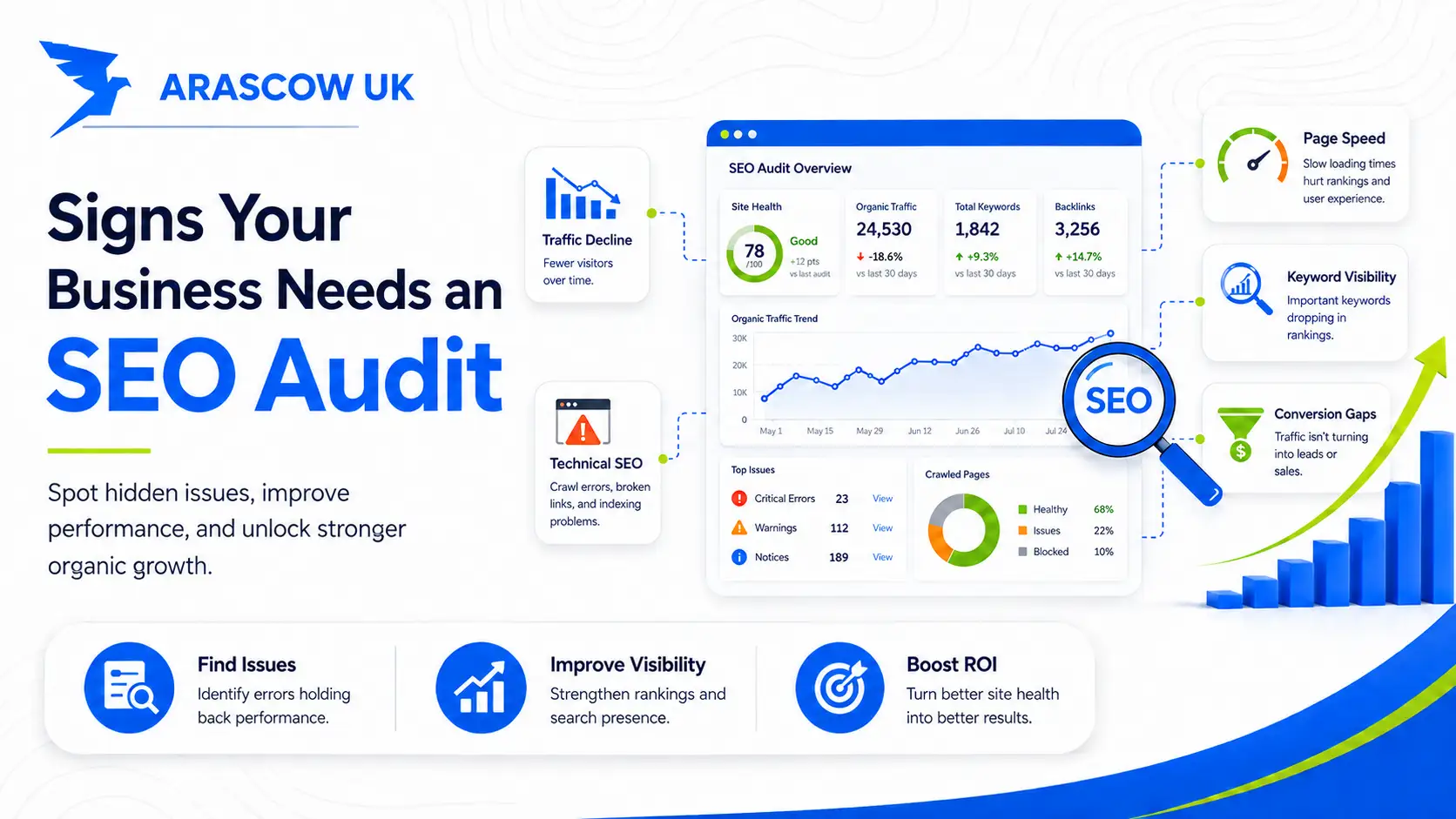
Signs You Need an SEO Audit
Traffic Drop
A major traffic drop is rarely a single issue. It is a forensic event requiring segment isolation. Manual actions or critical site deployment errors typically cause sudden drops of more than 30% within days. For example, accidentally pushing a noindex tag to production or major core algorithmic filters can be the root cause. On the other hand, steady erosion usually signals content decay, technical debt, creeping link rot, or structural changes by search engines.
Low Conversions
High traffic combined with zero business value indicates a fundamental disconnect between search intent and landing page positioning. There can be multiple reasons, including informational bias, which means the site ranks heavily for TOFU informational terms with zero transactional intent. Similarly, another issue is intent mismatch, in which the page layout or CTA fails to align with what the searcher expected when they clicked.
Ranking Stagnation
It happens when your optimization loop is outpaced by competitor velocity or changes in the underlying search graphs. The primary cause is content aging. This means content has hit its fresh-cycle limit and no longer serves the evolving intent of the query. Keyword cannibalisation also contributes to issues where multiple internal pages target the same keyword cluster. It causes search crawlers to split equity signals across URLs and suppress both.
Technical Errors
This signals code infrastructure flaws that block search engine crawlers from discovering, evaluating, or indexing your website. A main cause is crawl budget exhaustion, where search bots waste resources crawling duplicate URL strings, sorting parameters, or broken 404 links. It leaves high-value content un-crawled. Another major trigger is the renderability gap, where heavy reliance on client-side JavaScript execution requires a delayed two-wave indexing process.
Poor User Experience
Erratic navigation hierarchies and layout shifts mark this issue during asset load times. These flaws cause high Interaction to INP delays, creating user friction that drives visitors to hit the back button immediately. Search engines evaluate websites entirely through mobile rendering agents. So, any navigation setup that blocks viewports on mobile devices triggers a steady decline in mobile-first index rankings.
Content Gaps
This structural problem means your website lacks important keywords, updated blogs, or detailed pages, which limits your ability to rank for new search queries. It leaves the platform highly vulnerable to core helpful content updates because pages lack unique data, original analysis, or verifiable expert signals. Relying on these shallow explanations or low-value descriptions directly drops a website into the industry reality.
What Does An Seo Audit Include?
Technical SEO Audit
It evaluates the underlying code infrastructure that search engines use to parse your website beneath the content layer. The crawlability analysis identifies resource-wasting tracking parameters, redirect chains, and orphaned pages that exhaust your strict crawl budget.
The indexation check reviews server logs and Google Search Console to flag rendering failures caused by un-executable JavaScript or bad canonical tags. Performance metrics ensure that Largest Contentful Paint is under 2.5 seconds, Interaction to Next Paint is under 200ms, and Cumulative Layout Shift stays under 0.1.
On-Page SEO Audit
It reviews individual page elements to ensure your content matches user search intent. It also certifies that content communicates clearly with search ranking systems. Optimization steps check that titles stay under 60 characters and meta descriptions under 105 characters. This helps prevent truncation in search results.
For keyword usage, the audit uses NLP models to analyze semantic density. It also considers concept relationships rather than raw keyword stuffing. Content quality is evaluated against E-E-A-T guidelines. It helps filter out thin pages lacking original insights, outdated statistics that lower trust, or repetitive AI-generated text patterns.
Off-Page SEO Audit
This SEO analysis reviews external trust signals. It helps to see how other websites across the internet view your brand’s authority. The backlink profile health check analyses your ratio of high- to low-authority links.
It also looks at link earning velocity and anchor text distribution across brand names and target phrases. It reviews third-party authority metrics to ensure external link equity is distributed across your site. It also identifies toxic links that signal manipulative link schemes, comment spam, or negative SEO footprints.
SEO Performance Review
It connects technical and on-page adjustments directly to real-world business metrics without using grids or charts. Rankings tracking monitors search volatility and visibility across unique SERP features like local packs or rich snippets.
Traffic trends compare current organic metrics against historical Google Analytics 4 data to separate natural seasonal shifts from technical drops or algorithm updates. Similarly, conversion tracking verification checks GA4 custom events to ensure user actions track correctly.
Competitor Benchmarking
It reveals exactly where your rivals are outpacing you, highlighting functional gaps in your strategy. Finding keyword gaps surfaces high-value search terms where multiple competitors rank on page one, but your site is absent.
Content architecture comparisons map the structural frameworks of top rivals to show if they win using deeply organized content clusters instead of isolated landing pages. Link velocity benchmarking also tracks how fast competitors earn backlinks compared to your site.
Customer Benefits of an SEO Audit Checklist
Clarity
An SEO health check replaces uncertainty with data by diagnosing hidden technical barriers point by point. It isolates root causes by tracing compound indexing blocks directly to misconfigured middleware servers, rendering exceptions, or un-executable script bundles. It provides algorithmic transparency, separating external search updates from internal code modifications so you see exactly which folders fell behind quality guidelines.
Efficiency
An audit streamlines your budget by pointing resources toward real fixes instead of vanity metrics. For crawl budget optimization, it preserves server power for high-priority pages by eliminating tracking scripts and structural URL duplicates. It enforces content production discipline by flagging overlapping keyword targets, stopping teams from creating new content that fights against existing pages.
Growth
An audit surfaces hidden demand pools and alternative entry points that competitors have missed. Through intent gap identification, it highlights instances where users want transactional pages, but your site only offers high-level informational articles. For entity graph expansion, it maps out missing subtopics and conceptual associations to satisfy search engines that rely on interconnected topic maps rather than single keywords.
Trust
A flawless technical setup sends positive signals to search engines and forms the foundation of a reliable user experience. It ensures predictable interface performance by targeting asset-sizing errors and eliminating sudden layout shifts during page loads that frustrate users. Security protocol verification scans every script to ensure user data remains fully encrypted, removing broken certificates or mixed content warnings that destroy consumer confidence.
ROI
Technical adjustments directly influence corporate profitability by removing friction from the user conversion path. Reducing conversion friction targets slow server response times to decrease cart abandonment, keeping buyers engaged through checkout. High-value intent targeting shifts optimization priorities away from high-volume vanity terms toward buyers showing strong transactional intent.
How Long Does an SEO Audit Take?
Small Sites
A standard web property with fewer than 100 pages requires 7 to 14 business days to gather real-world performance metrics over a stable multi-day cycle. This window allows for the collection of server response codes, verification of Google Analytics 4 tracking script stability, and calculation of keyword position changes. It is not just about running an automated crawler; auditors must evaluate code rendering on mobile viewports and inspect internal link paths.
Large Sites
Enterprise and inventory-heavy websites require 21 to 45 business days because they rely heavily on complex database operations and automated content filters. Auditors spend weeks tracking down crawl budget leaks, such as search bots getting trapped in millions of product filter variations like color, size, or price sorting. This extended timeframe covers deep forensic tasks like checking server log files to monitor search engine behavior.
Speed Less Important Than Accuracy
A rushed audit creates a major business risk by delivering generic checklists. It does not show the true technical problems holding back revenue. Free, instant automated tools only check surface-level rules. They miss deeper issues like broken server configurations, script execution errors, or data tracking discrepancies. Acting on a shallow audit causes engineering teams to waste weeks fixing minor issues. It leaves critical indexation barriers untouched.
When & How Often to Audit
Recommended Frequency
Conducting a comprehensive review every 6 months sets a clean baseline. It’s perfect for capturing subtle code changes, broken links, and creeping content decay. Marketing teams routinely publish new landing pages, adjust plugins, and modify tracking codes.
Routine checkups catch these unauthorised script additions and tracking errors. They ditch them before they compromise server speeds or skew analytics data. Annual audits also ensure your underlying code infrastructure stays fully compatible with rapid browser updates.
Situations That Demand an Immediate Audit
Certain business events create emergencies that require turning off automated tools for immediate, human-driven investigations. A sudden drop of 20% or more in organic traffic signals an immediate infrastructure crisis. It requires a fast inspection of security status, indexation errors, manual penalties, or accidental site-wide blocking tags.
Similarly, massive core algorithm updates require an immediate review to map how your layout matches new quality guidelines and isolate visibility shifts. Site redesigns or platform migrations also open the door to technical errors, making pre- and post-deployment audits crucial to catch broken page mappings or missing redirect chains.
Is an SEO Audit Worth It?
Cost vs Benefit
An SEO audit shifts a business from guessing about its digital issues to executing high-impact technical fixes. While a professional audit requires a short-term cash outlay, ignoring structural problems creates a constant financial drain. This is because search bots continue to waste server power indexing broken filters or duplicate pages.
Rewriting existing code infrastructure based on clear data points is significantly cheaper than launching entirely new websites or building expensive ad campaigns to replace lost organic traffic. Furthermore, resolving underlying crawl and indexing errors lifts visibility across your entire page catalogue.
How Audits Prevent Bigger Losses
An audit works like a digital insurance policy, catching hidden technical errors before they turn into major structural revenue drops. Slow mobile page loading and shifting page elements cause immediate drops in user interaction. However, fixing these code issues keeps interested buyers from hitting the back button.
Paid ad campaigns often send traffic to landing pages that have broken tracking code, un-optimised layouts, or conflicting content signals. An audit cleans up these pages to ensure your ad dollars pull in actual, measurable sales. Proactive reviews flag content depth and trust vulnerabilities early, protecting your primary traffic pipeline from crashing
Final Analysis
An SEO audit isn’t a cost; it’s an investment in your business growth. However, taking it right when your business needs it most, from a professional, certified agency, is key to long-term growth. Arascow is the leading SEO and digital marketing agency in London, offering comprehensive SEO audit services from startups to large businesses. Their extensive industry experience and advanced expertise make them an ideal choice for local businesses. Partnering with them ensures customers get a thorough analysis of their online presence, current situation, and best next steps. Contact them right away by visiting their website.
FAQs
What is an SEO audit?
An SEO audit is a comprehensive evaluation of a website’s health. It uncovers technical, on-page, and off-page issues halting search engine visibility.
Why do I need an SEO audit?
You need it to identify hidden errors blocking organic traffic. It provides a data-driven roadmap to fix broken links, slow pages, and poor keyword targeting.
How often should I audit my website?
Audit your website thoroughly every 6 to 12 months. Perform mini-checks monthly to catch critical crawl errors and broken pages early.
Can an SEO audit improve rankings?
Yes, by fixing the specific technical and structural errors discovered. Resolving crawl blocks and page speed bottlenecks directly improves search engine indexing.