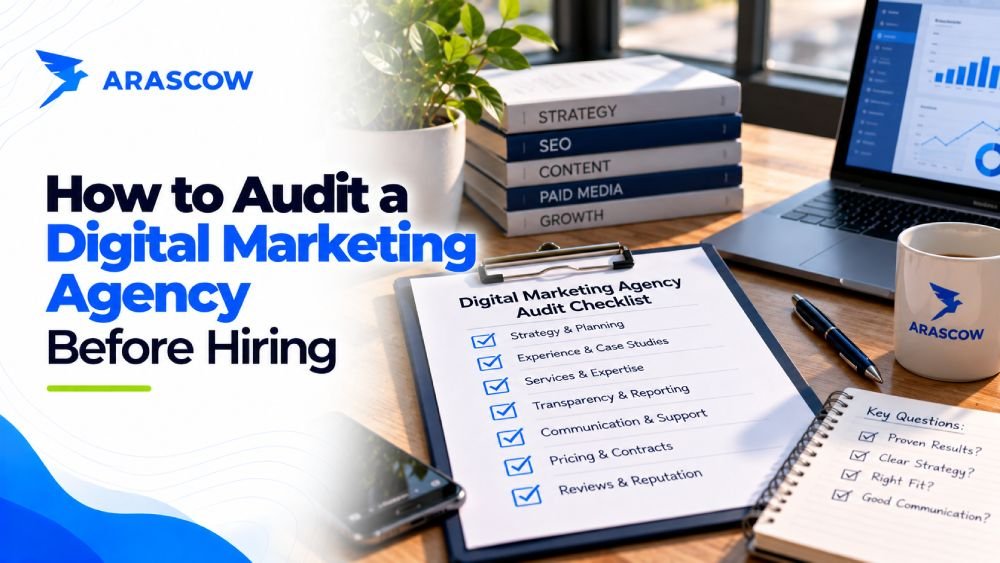
The traditional way to pick an agency is completely broken. Most companies rely on sleek sales presentations, old success stories, and senior bosses who disappear the moment you sign the contract. This massive mismatch puts your business in a bad spot. A smooth pitch can easily hide sloppy daily work and a chaotic backend team. When an unqualified agency takes over your accounts, the damage goes way beyond a wasted ad budget. The real danger is the slow destruction of your digital assets. You can easily end up with broken tracking codes, messy data setups, and ruined analytics that take months of hard work to clean up and fix.
A deep pre-hire check lets you look past the fancy sales talk. It forces a new agency to show you its actual daily setup, its software systems, and the real people who will handle your money before any contract is finalized. High-quality teams welcome these deep technical checks because they love to prove their actual skills. On the flip side, defensive answers or vague excuses are an immediate sign to walk away. You can protect your marketing money, secure your data tracking, and focus completely on long-term profits by becoming an active auditor instead of a passive viewer. Brands that want to avoid this painful trial-and-error process entirely can partner directly with a fully verified Digital Marketing Agency that proves its value through clear, honest growth numbers from day one.
How to Perform a Digital Marketing Audit
Request Redacted Deliverables
Do not judge an agency by their perfect, high-level slide decks. Instead, ask for real, live strategy sheets, data setups, and technical plans that they gave to actual clients within the last ninety days. Your internal tech team must check these materials closely. Look for deep audience research, custom competitive insights, detailed launch timelines, and exact code changes instead of lazy, generic templates.
The 3-Second Hook
The agency must build ad creatives and website headers that catch a user’s eye within the first three seconds. This quick impact stops people from scrolling past your content. The team needs to use high-contrast images, place your main solution in the very first lines of copy, and optimize page speeds. This approach puts your main call to action right where people naturally look, which keeps them from leaving your site immediately.
The 3-Minute Story
Once you have their attention, the agency’s content team must keep people reading for at least three minutes. This time allows the copy to explain your unique brand value and answer common buying doubts. The team uses smart layouts like interactive carousels, clean content blocks, and simple drop-down tabs. These tools share deep educational facts and customer proof without making the page feel confusing or heavy.
The 3-Month Commitment
The agency must use a mandatory ninety-day timeline to run their initial tests, collect baseline numbers, and let ad platform algorithms finish their learning cycles. This phase requires clear goals for every thirty-day block. It also requires a stable testing environment to protect your budget from sudden market shifts. You can launch data-driven SEO and PPC campaigns during this early stabilization phase to prevent ad fatigue and build a strong search ranking that lasts.
What Are the 7 Steps in the Audit Process?
Step 1: The Real Account Team Review
Agencies often bring in senior experts and founders to close a big deal, but they quietly hand the daily work over to fresh interns or cheap offshore freelancers once you sign the contract. You should demand a live technical screening session with the exact people who will make daily changes to your campaigns. Make sure your contract explicitly names your daily managers and includes a clear rule that requires written notice before anyone leaves your team.
Step 2: Cross-Channel Communication Check
Isolated agency departments are a massive cause of wasted ad spend because separate teams do not share data freely with each other. You must look at the agency’s live project management tools to confirm they use clear communication routines. This setup ensures that winning ad copy ideas go straight to the design team, and valuable organic search keywords go to the paid ads team to lower your total bid costs.
Step 3: Software and Tool Compatibility Check
Mismatched marketing tools lead to broken links, lost customer profiles, and manual data errors that mess up your analytics. You must map the agency’s data dashboards against your internal tech stack. This step ensures their systems hook up directly to your CRM and website tags via safe connections without requiring manual data cleanups or breaking your site layout.
Step 4: Full Data and Account Ownership Audit
Many agencies build ad profiles, tracking tags, and data folders inside their own corporate master accounts. This predatory setup leaves you locked in, meaning you lose all your historical data if you ever decide to fire them. You must verify that your business keeps full master admin ownership over all Meta profiles, search ad accounts, and tag containers. The agency should only get partner access that you can turn off in a single click.
Step 5: Hidden Fee and Markup Verification
Confusing billing styles can easily hide terrible results. Opaque agencies often bury secret markups inside your ad spend, pocket vendor discounts, or wrap software fees into inflated bills. You must enforce a completely clear financial setup where every ad platform bills your corporate credit cards directly. This arrangement keeps the agency’s monthly fee totally separate and gives you access to raw billing logs from the ad platforms.
Step 6: Real Revenue vs. Vanity Metrics Test
Low-quality agencies often hide bad performance behind shallow vanity numbers. They brag about spikes in views, video impressions, or cheap top-of-funnel clicks while your actual business sales stay completely flat. You should force the agency to show you a live dashboard that links front-end ad clicks directly to back-end CRM sales. This tracking keeps the focus on hard business metrics like won deals, pipeline value, and total company cash profit.
Step 7: Attribution Modeling Standards Audit
Agencies frequently rely on basic last-click models that give 100% of the conversion credit to the very last link a customer clicked. This trick inflates retargeting numbers while it hides the top-of-funnel ads that actually brought in the customer in the first place. You must make sure your agency uses advanced, data-driven multi-touch tracking. This system must blend server data, offline sales, and journeys across different devices to prevent double-counting.
Can ChatGPT Do a Social Media Audit?
AI Tool Integration Review
An agency should not rely entirely on slow, outdated manual processes. Instead, they must show a clear plan for using generative AI platforms and specialized tools to speed up daily work. You should check their processes to see if they use AI for complex tasks like reading massive lists of raw customer feedback, tracking deep group trends, and building thousands of ad variations for automated tests.
AI Search Engine Readiness
Modern search visibility goes way beyond standard search results pages. Agencies must optimize your digital content for AI engines, answer bots, and modern systems like ChatGPT Search and Google’s AI Overviews. You must verify that the agency’s long-term plan details exactly how to get your brand cited inside AI answers by building highly authoritative content footprints and clean tech frameworks across the web.
The Human-in-the-Loop Safeguard
The absolute biggest risk with corporate AI use is lazy, unedited copy-pasting. This habit ruins your brand voice, creates boring messages, and triggers search engine penalties or copyright headaches. You must check the agency’s formal human safety rules to ensure they use real editors. These people must review, fact-check, and deeply polish every single piece of AI-assisted Content Writing or design asset before it goes live to keep your brand completely safe.
What Is the 70/20/10 Rule in Marketing?
Core Budget Allocation (70%)
The base level of your marketing budget must go entirely into proven, low-risk channels that give you highly predictable returns. This large slice usually funds your long-term organic SEO work, highly targeted search ads that capture people who want to buy right now, and automated email setups. The agency must watch these campaigns daily to stop any budget waste.
Scaling and Optimization (20%)
The second slice of your budget targets new channels or close audience groups that show early promise but need careful testing to grow. This work includes expanding into secondary ad platforms like TikTok or LinkedIn, launching custom programmatic ads, or testing targeted influencer campaigns. The agency must polish these tests methodically to turn them into your next big revenue sources.
Experimental Ideas (10%)
The final tenth of your budget is a protected slice meant for testing high-risk, high-reward ideas, unproven trends, and brand-new ad features. This small fund lets your business pilot early beta tools, interactive visual features, or new AI tests. The process relies on a fast validation routine that protects your core business revenue from sudden market changes.
Final Analysis
When you check out a marketing agency on your own, it can expose your business to massive mistakes. Similarly, trying to manually check the software systems, data connections, and multi-touch tracking models can quickly drain your corporate cash and leave your digital assets completely ruined. That’s why a direct partnership with a fully validated team like Arascow completely removes this risk from your growth path. As a certified Google Partner working across Greater London and globally, Arascow replaces empty sales pitches with deep, data-driven tech work. They bring over seven years of expert experience and a proven 99% client satisfaction record to your business. You can contact their expert team today to secure a free professional checkup.
FAQs
What are the 7 C’s of digital marketing?
This framework moves marketing away from old business habits and focuses entirely on the consumer by balancing Customer, Content, Context, Community, Convenience, Cohesion, and Conversion. It ensures the agency builds smooth, high-value buyer experiences across all channels.
What are the 5 C’s of marketing?
This classic planning model requires an agency to study the market landscape by analyzing the Company, Collaborators, Customers, Competitors, and Context. It provides the core research data you need before launching any new marketing campaign.
What are the 7 types of digital marketing?
The main branches are SEO, PPC, organic and paid social media, content marketing, email automation, influencer marketing, and data analytics. A professional agency must use dedicated specialists for each area instead of relying on generalists who do a bit of everything.
Who owns the marketing assets, accounts, and data if we part ways?
Your business must keep 100% legal master administrative ownership of all ad profiles, tracking tags, assets, and historical data from the very first day. The agency must work only through partner permissions that you can turn off at any moment.
How will success be measured and reported?
Success must be tracked through real sales metrics like customer acquisition costs, pipeline value, and actual business profit rather than useless clicks or impressions. High-performing agencies share live, automated dashboards instead of flat monthly PDF files.